Home › Services
Garage, Shed and Carport Demolition Around Gretna and the West Bank
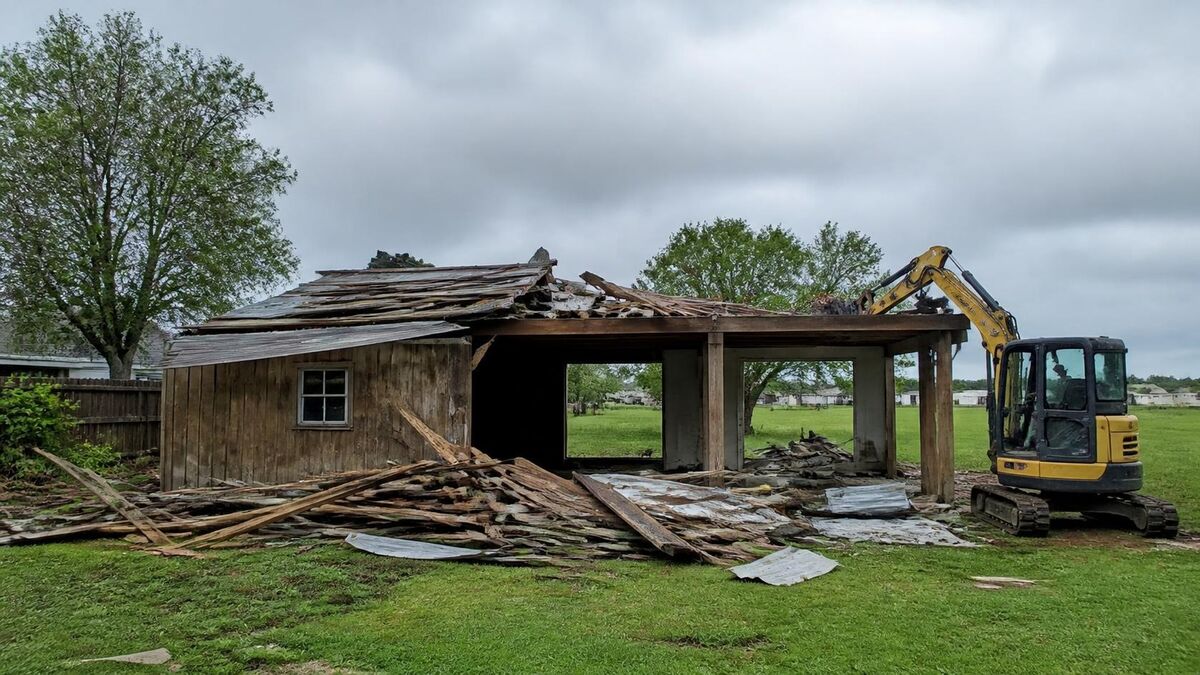
A leaning garage, a carport with a rusted-through roof, a shed that took on two feet of water: small structures are where a lot of yards around Gretna start looking tired. Taking one down is a smaller job than a whole house, but it has its own puzzles. The equipment has to reach the backyard without wrecking the lawn or cracking the driveway. Any wiring run out to the building has to be made dead first. Someone has to decide whether the slab stays as a patio or comes out with everything else. Below you will find how freestanding garages, sheds, carports, decks, gazebos and barns get removed, plus how a properly finished yard should look once the last load is gone.
What falls under garage and shed demolition
This is the work on everything standing on the lot except the main house. Around the West Bank and the East Bank suburbs, that usually means:
- Detached one- and two-car garages, wood framed or block, some with a workshop or storage loft.
- Carports, from bolted aluminum kits to wood-framed roofs tied into the side of the house.
- Garden and storage sheds, prefab metal buildings and old tool rooms behind the main house.
- Barns, stables and equipment sheds on the larger lots found farther out on the West Bank.
- Wood decks, gazebos, pergolas and covered patios that have rotted or no longer fit the yard.
Why these buildings end up coming down
Outbuildings take the weather harder than houses do. They are rarely built to the same standard, they often sit right on the ground, and nobody notices the damage until a door will not close. After Ida in 2021, plenty of yards were left with carports peeled open, shed roofs gone and garages pushed off square. Termites work through bottom plates and sills unseen, and the soft, settling soil here lets a slab tilt until the walls follow it.
Sometimes nothing is wrong with the building at all. An owner wants the space for a pool, a bigger driveway, an addition or simply more yard, or a buyer has asked for an eyesore to be gone before closing. Taking out the old structure is the first step either way.
Getting equipment into the backyard
Access shapes this job more than anything else. When the garage sits at the back of a clear, straight drive, access is simple: a compact track machine rolls right up to it while the haul truck or trailer stays parked out front. A shed tucked behind the house on a narrow city lot is a different story. The contractor will measure side yards and gates, look for a route that avoids fragile parts of your yard such as drain lines and irrigation, and ask whether a fence panel can come out for a day.
When nothing with tracks will fit, the work goes by hand and wheelbarrow, with debris carried or carted to a trailer out front. That takes longer and costs more in labor, but it is often the only way to reach a building wedged between a house and a property line.
Hand demolition versus taking it down with a machine
A small excavator with a thumb can fold a free-standing garage into a sorted pile in short order, and it is the obvious choice when there is room. Hand work makes more sense when the structure touches something that has to survive. A carport fastened to the house wall, a deck hung from a ledger board on the back of the home, or a garage built right on the line beside a neighbor's building all call for someone with a saw and a pry bar taking the connected parts apart piece by piece.
Many jobs mix the two. The attached edge is cut free by hand, flashing and fasteners are pulled so the house wall can be patched, and then a machine handles the rest. When an attachment point is opened up, expect to see bare sheathing or old holes in the siding that need closing afterward, which is a repair for a carpenter, not the demolition contractor, unless the proposal says otherwise.
Power, water and gas running out to the garage
A lot of detached garages and workshops have their own electrical feed, either an overhead wire from the house or a buried line to a small panel. An electrician needs to kill that feed at the house breaker box and unhook it at the garage end before demolition starts, then terminate any underground run so no energized wire stays buried in the yard. Some garages also have a water line to a utility sink or hose bib, and a few have gas to a heater, both of which need to be capped back at the source.
If anything will be dug up, call Louisiana 811 first so buried utility lines get marked. Older garages and sheds can also carry materials that call for an asbestos check before demolition, such as cement-based siding panels or old roofing; the contractor will tell you whether a survey is needed, and the house demolition page explains how that process works.
The slab: leave it as a patio or break it out
Most garages and many larger sheds sit on a concrete slab, and deciding its fate is the biggest scope question on the job. A slab that is flat, sound and drains away from the house makes a ready-made patio, parking pad or base for a new shed, so leaving it is often the smart choice. If it is cracked, sunken toward the house, heaved by a tree or in the way of what you plan to build, it should come out with everything else.
Smaller sheds often sit on concrete blocks, treated skids or a gravel pad, and decks and carports stand on posts with buried footings. Those footings should be dug out, not just cut off at the surface, so they do not snag a mower or a future fence post. Breaking out a thick slab or a long driveway next to the garage is a concrete job in its own right, covered on the concrete removal page.
Protecting lawns, driveways and everything else that stays
A loaded dump truck parked on an older driveway can crack it, and a tracked machine crossing a soaked lawn will leave ruts that hold water for weeks. The ground here stays soft after a rain, so the best contractors plan around it. Ways they typically keep damage down:
- Laying plywood or ground mats across the lawn along the route to the structure.
- Keeping heavy trucks at the street and shuttling debris out with lighter equipment.
- Waiting a day or two when the yard is saturated rather than tearing it up.
- Marking irrigation heads, drain lines and shallow pipes before the machine arrives.
- Fencing off the roots of trees and beds you want kept, and protecting nearby windows and siding.
Small-structure permits, in general terms
Whether you need a permit depends on the building and on who governs the address. A detached garage or a structure with electrical service will often need a demolition permit, while a small prefab shed may not; the rules are set by the city in places like Gretna, Kenner and New Orleans, and by Jefferson Parish in unincorporated areas. A quick call to the local building office settles it, and any demolition outfit that regularly works these parishes has usually dealt with the question before.
In historic parts of New Orleans, even an old outbuilding can draw review before it is allowed to come down, so check first if the property is in a district. If utilities ran to the building, the office may want to see them disconnected before it issues anything.
Hauling the debris off
Small structures produce less debris than people fear, but more than fits in a pickup. Depending on access, the contractor may use a dump trailer, a dump truck or a roll-off container dropped at the curb. Metal sheds, aluminum carports and steel framing are scrapped. Concrete and block usually go to a crushing yard for recycling. Lumber, old siding, roof shingles and rotted deck boards are hauled to a disposal site or transfer facility that accepts building waste.
Empty the building before demolition day. Old paint cans, fuel, chemicals and tires cannot go in with ordinary construction loads, and sorting them out mid-job slows everything down. Anything you plan to keep, such as a workbench, shelving or a good door, should be out of the building or clearly marked.
What your yard looks like when the job is finished
Once the structure and its debris are gone, the footprint should be raked clean of nails, screws and splinters, and post or footing holes backfilled and tamped. If the slab came out, the area is leveled with fill and shaped so water does not pool against the house or a neighbor's fence. Many owners ask for topsoil and seed or sod on top; others leave it bare until the next project starts.
If the slab stays, its edges should be clean, anchor bolts cut flush or ground down, and any broken corners removed so the pad is safe to walk on. A quick magnet sweep of the yard is a sign of a contractor who cares about the details, since stray nails in a lawn tend to find tires and bare feet.
What moves the price, and what the proposal should cover
The contractor prices the job after seeing it. What pushes the number up or down: how big the building is and what it is made of (lumber, sheet metal or concrete block), its distance from the curb and whether equipment can get to it, any shared wall with your home or the one next door, whether the slab or footings are coming out, electrical or plumbing lines needing cutoff, asbestos if testing turns some up, and how many loads of which kinds of debris leave the lot. A written proposal should list each structure by name, say plainly whether the slab stays, explain who handles disconnects and the permit, and describe how the yard will be left.
Got a garage, carport or shed that needs to go? Snap a few pictures, note the street address, and pass both along on the contact page; a local demolition outfit takes it from there. Owners on the West Bank can also read about local conditions on the Marrero page.
Garage — common questions
Does Gretna require paperwork before I knock down an old backyard garage?
It depends on the structure. A detached garage, or anything with electrical service, typically needs a demolition permit from the city, while a small prefab shed sitting on blocks may not. Outside city limits, Jefferson Parish sets the rules for unincorporated areas. The safest move is to ask the permit office before work starts, or let the contractor confirm it as part of the proposal.
Can the garage slab be left in place after the garage is torn down?
Yes, and it often makes sense. A level, uncracked slab that drains away from the house can serve as a patio, parking pad or base for a new shed. The contractor cuts or grinds down anchor bolts and cleans the edges. If the slab is sunken, badly cracked or sitting where you want something else, removing it with the building is usually cheaper than coming back later.
How do you get equipment into a backyard with no driveway?
The contractor looks for the widest route, which may mean removing a fence panel or using a gate. Compact machines such as a mini excavator or a small track loader can fit through surprisingly narrow side yards, especially with mats laid down. When nothing will fit, the structure is taken apart by hand and the debris carted out front by wheelbarrow, which takes longer but protects the yard.
Can a carport attached to my house be removed without damaging the house?
Usually, if the connection is taken apart by hand rather than pulled off by a machine. The roof framing and ledger are unbolted or cut free, flashing is removed, and the free-standing part comes down afterward. You will likely be left with fastener holes or a strip of unpainted siding where the carport met the wall, so plan on a small repair after the demolition is done.
What happens to the electrical line that runs to my detached garage?
It has to be made safe before demolition. An electrician turns off the circuit at the main panel, disconnects the wiring at the garage end, and either removes the buried or overhead feed or terminates it so nothing is left live. If the line is buried, a call to Louisiana 811 marks other utilities nearby so the trench and the demolition work avoid them.
Will heavy equipment tear up my lawn during shed or garage removal?
It can, especially on soft, wet ground, which is why planning matters. Ground mats or plywood spread the weight of a machine, keeping trucks at the street prevents driveway damage, and waiting out a soggy spell avoids deep ruts. Some light marks are normal on any job with equipment; ask the contractor how they plan to protect the route and whether they will rake and reseed afterward.
Talk through your site
Start with the address, what needs to come down, and a few photographs of the structure and the access to it.
Related work
House Demolition
Full teardown of a raised or slab house down to a clean lot, with piers or slab removed and utilities cut first.
Pool Removal
In-ground and above-ground pools broken out or filled in, with fill that holds up in soft, wet ground.
Interior Demolition
Storm- and water-damaged rooms, kitchens and baths gutted to the studs, protecting what stays.
Concrete Removal
Sunken driveways, patios, walks, slabs and steps broken up and removed, ready for what comes next.
Across the metro
New Orleans
The city itself: raised shotguns and cottages, historic districts, narrow lots and close neighbors.
Metairie
East Bank suburb with slab ranches, raised rebuilds, backyard pools and drainage canals.
Marrero
West Bank community with postwar houses, carports, sheds and storm-damaged outbuildings.
Kenner
Airport-side East Bank city with ranch houses, slab additions, pools and low-lying streets.